|
|
Posted By Administration,
Friday 10 January 2025
Updated: Friday 17 January 2025
|
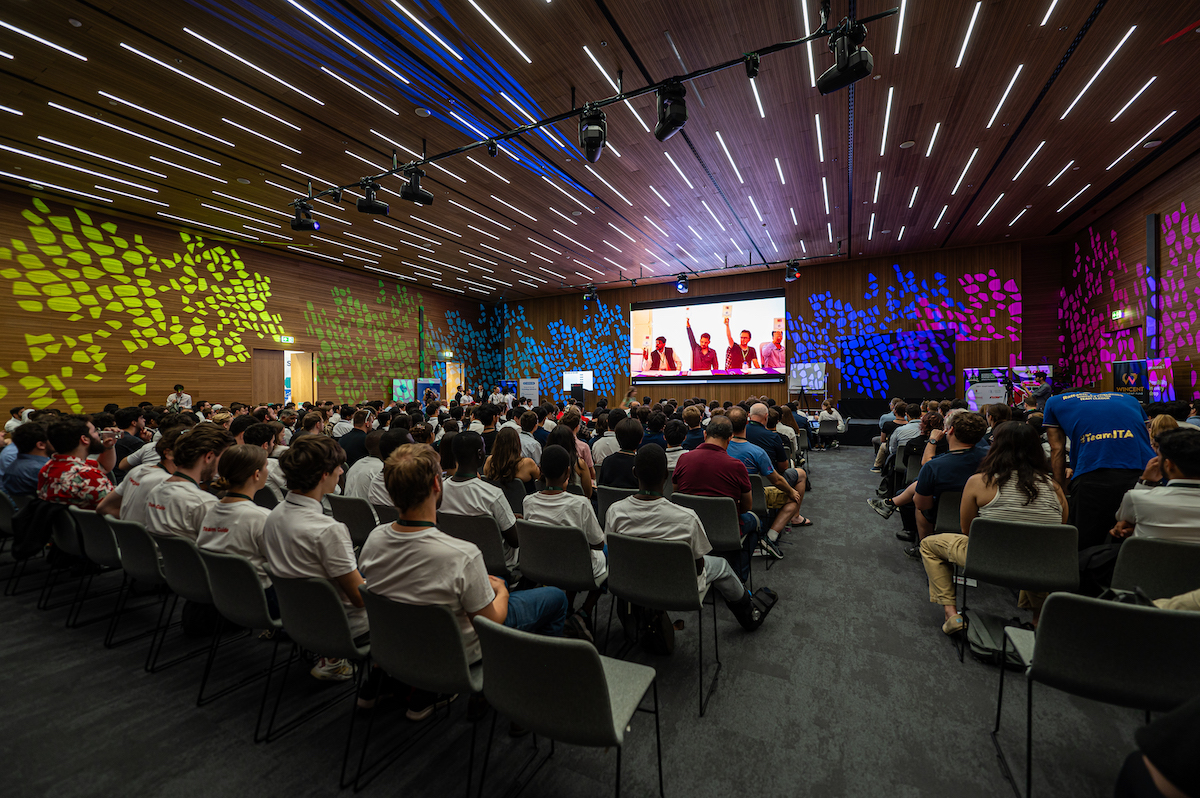
image credit: IYPT
The International Young Physicists' Tournament (IYPT) will take place from 29th June to 6th July 2025 in Lund, Sweden. Sam Edgecombe, chairman of IYPT Sweden, invites you to take part in the event.
What is IYPT?
The International Young Physicists' Tournament (IYPT), sometimes
referred to as the "Physics World Championship," is an annual
international competition for high school students (pre-university). The
purpose of hosting IYPT 2025 in Lund is to showcase Sweden as a
knowledge nation, promote education in STEM (Science, Technology,
Engineering, Mathematics), especially physics, encourage creativity and
independence among youth, and enhance international understanding and
collaboration.
Every summer, 17 problems of both theoretical and
experimental nature are released. These problems can be interpreted in
various ways and are sometimes unsolved. Solving them mimics real
research, where experiments are conducted to investigate a phenomenon,
compared with theory, and then compiled into a proposed solution.
Students
compete by “fighting” against each other: one student presents their
proposed solution to an IYPT problem (published a year in advance),
while another student acts as an opponent. An international jury of
physicists grades the participants. After five rounds, a final is held
among the top three countries.
IYPT in Lund
IYPT is a unique opportunity for high school students to work with
physics and present their results in an international setting. By
hosting the IYPT final in Lund, we hope to inspire participants to
pursue higher education and careers in physics and natural sciences in
Sweden and the Skåne region.
The Medical Faculty and the
Department of Physics have made some teaching facilities available free
of charge, for which we are very grateful.
We expect teams from
approximately 40 countries, including Australia, Austria, Brazil,
Bulgaria, Canada, Taiwan, Croatia, Czechia, Georgia, Germany, Greece,
Hong Kong, Hungary, India, Iran, Italy, Kazakhstan, South Korea, Macau,
Mexico, Nepal, New Zealand, Nigeria, Pakistan, Poland, Romania, Serbia,
Singapore, Slovakia, Slovenia, Sweden, Switzerland, Thailand, Türkiye,
Uganda, Ukraine, the United Kingdom, and the USA. 36 countries are
pre-registered at the time of writing.
We are looking for more
countries to participate in the IYPT. If you are interested in
organizing the IYPT in your country, please get in touch with us and we
can provide you with more information about how to take part. You could
also apply as a visitor to the IYPT 2025 an experience the IYPT for
yourself firsthand.
The IYPT 2025 is only possible thanks to our partners and sponsors:
Skolverket (Swedish National Agency for Education), Jacob Wallenberg
Foundation, Jane Street, Visit Skåne, Visit Lund AB, Beijer Foundation,
Olle Engkvist Foundation, Wenner-Gren Foundations, Einar Hansen Allhems
Foundation, Oscar and Maria Ekman's Donation Fund, Magnus Bergvall
Foundation, the Swedish Foundation for Strategic Research, Sven and
Dagmar Salén's Foundation, Bertil Wollert's Scholarship Foundation, Lund
Municipality, Region Skåne, Carl Tryggers Foundation and Vernier.
About
IYPT Sweden is a nonprofit organization. Its purpose is to motivate
youth, promote their research and problem-solving skills, and stimulate
their passion for science through the current 17 IYPT problems.
Additionally, the organization selects and sends Sweden's IYPT team to
the international competition.
Contact: info@iyptsweden.org
Website: www.iypt.se
Instagram: @iypt_sweden
Preliminary Program
June 29, 2025:
June 30, 2025:
- Opening ceremony with drawing of lots
- First Fight
July 1, 2025:
- Second Fight
- Half-day activity
July 2, 2025:
July 3, 2025:
July 4, 2025:
- Fifth Fight
- Half-day activity
July 5, 2025:
- Final
- Award ceremony and closing dinner
July 6, 2025:
- Departure
- First day of the International Organizing Committee (IOC) meeting
July 7, 2025:
- Second day of IOC meeting
July 8, 2025:
Tags:
International Young Physicists' Tournament
IYPT
Sweden
Permalink
|
|
|
Posted By Administration,
Monday 27 June 2022
Updated: Monday 27 June 2022
|
Author: Sune Svanberg
On 10th May, 2022, the old Physics Department of Lund University,
Sweden, was inaugurated as an EPS Historic Site. The building, which is
located at Biskopsgatan 3, Lund, served the Lund physicists during the
years 1885 to 1950. It had two halls for instruments, an auditorium, 12
offices, a library and a workshop. The building then became the base for
classical studies (Classicum) until in 2009 after renovation became
the site of the interdisciplinary Pufendorf Institute of Advanced
Studies. The ceremony was actually planned for 26th May 2020, but had on
short notice to be moved forward due to the Covid-19 pandemic.
The
nomination as an EPS Historic Site is based on the work of Johannes
(Janne) Rydberg (1854-1919), who was active in analyzing atomic spectral
lines, which Bunsen and Kirchhoff around 1850 had found to be specific
for each species. Balmer had in 1885 found a formula to describe the
lines of hydrogen. Being an excellent mathematician, with a great
feeling for numbers, Rydberg found a more general formula, which also
worked well, e.g. for the alkali atoms. He presented his first results
in 1887 in a report to the Royal Swedish Academy of Sciences, and more
in detail in a presentation to the Mathematical-Physical Society in Lund
in 1888. The full account of his findings occurs in a scientific
article published in German in 1890 (Zeitschrift für Physikalische
Chemie). The most amazing aspect of this formula was that there occurred
a constant, which was the same for all elements and all spectral
series. In his early model for the atomic structure, Niels Bohr could in
1913 also give a theoretical value for the constant, which well agreed
with the experimental value found by Rydberg. The constant came to be
known as the Rydberg constant, and is presently determined to an
extremely high precision using laser spectroscopy. Rydberg´s name is
also associated with the much studied Rydberg atoms, which are very
highly excited atoms becoming accessible through laser spectroscopy, and
through the Rydberg-Ritz combination principle of atomic spectroscopy.
It can be noted that Manne Siegbahn (1886-1978) was also active in the building, making ground-breaking precision X-ray spectroscopy studies. Bengt Edlén
(1906-1993), who in 1941 solved the old problem of the origin of the
corona lines from the sun, was a further prominent Lund atomic
physicist.
The inauguration ceremony was organized and led by Sune
Svanberg, who had also made the site nomination. Stacey Ristinmaa
Sörensen, the Pufendorf Institute director, welcomed a large crowd of
fellow physicists assembled to celebrate, and Joachim Schnadt, chairman
of the Department of Physics, recalled the work by Rydberg. Mats
Helmfrid expressed his appreciation on behalf of the Lund City Council.
The chairman of the EPS selection committee for historic sites, Karl
Grandin, introduced the EPS programme together with the EPS president,
Luc Bergé, who also performed the solemn uncovering of the memorial
plaque, accompanied by a brass band.
A Rydberg Lecture, in a
series of named lectures sponsored by the Royal Academy of Science,
followed at the new Physics Department directly after the inauguration
ceremony. The speaker was Jun Ye, JILA, National Institute of Standards
and Technology and University of Colorado, who in his talk “Tick Atoms
in Unison” described how extremely accurate atomic clocks could be
influenced by the gravitational shift due to only one mm of vertical
clock movement.
A Rydberg dinner arranged with some 30 guests in
the recognized building, with speeches including by the Lund University
vice Chancellor, Erik Renström, concluded a memorable day.


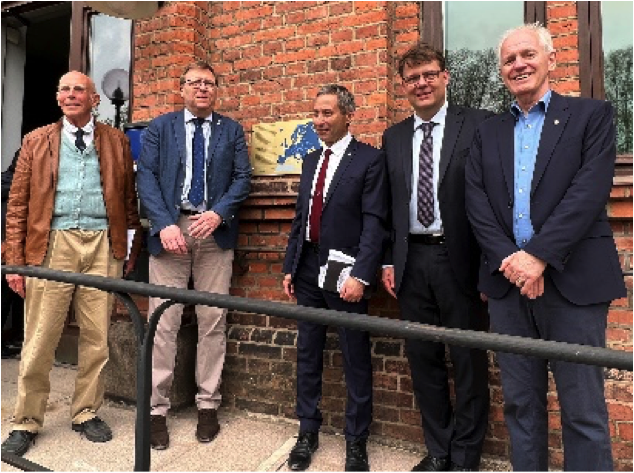
The memorial plaque at the old Physics Department, Lund University, has
just been uncovered.
FLTR: Sune Svanberg, Lund Laser Centre,
Karl Grandin, Chair of the EPS Historic Sites Selection Committee,
Luc
Bergé, EPS President, Joachim Schnadt, Department of Physics, and Mats
Helmfrid, Lund City Council
Photos: Sune Svanberg & Katarina Svanberg
Tags:
distinction
EPS Historic Site
Lund
Sweden
Swedish Physical Society
Permalink
|
|
|
Posted By Administration,
Friday 24 September 2021
Updated: Friday 24 September 2021
|
Author: Carla Puglia
On 6th August 2021, a
new EPS Historic Site was inaugurated in Uppsala, Sweden. This is the
third EPS site in Sweden and it is dedicated to Anders Jonas Ångström.
The place where the plaque is located is a building in central Uppsala,
next to the Carolina park (Thunbergsvägen 3). This building was
originally a chemical laboratory (“Gamla Kemikum”), converted in 1856
into a laboratory for experimental physics and physics teaching. As part
of the physical institute (“Fysikum”), it hosted physics research for
143 years, until several university departments within natural sciences
moved to the newly built Ångström laboratory, named after both Anders
Jonas Ångström and his son Knut Ångström.
This EPS award is a
recognition of the work by A. J. Ångström who performed fundamental
studies that contributed to many fields of physics and, moreover,
promoted experimental research and introduced experimental laboratory
training in physics education. A. J. Ångström studied a wide range of
physical phenomena such as the variations of the terrestrial magnetic
field, the comets, the theories of elasticity and heat conductivity and,
most importantly, he was a pioneer in the field of experimental optical
spectroscopy. Ångström performed meticulous measurements of the Sun and
produced the first solar atlas with wavelengths in the metric system,
which also led to the introduction of the unit of 1 Ångström = 10–10
m, widely used in modern spectroscopy and crystallography. As part of
his work in optics, he also identified several newly discovered
absorption lines that had not yet been identified on Earth. In 1870,
upon being elected to the Royal Society in London, his pioneering work
“Optical Investigations” (1853) was quoted as containing the fundamental
principles of nearly all that has been done since. In 1872, Ångström
became the first Swedish physicist to be awarded the Rumford medal, “for
his researches on spectral analysis”.
The EPS Historic Site in
Uppsala is marked by a plaque on a stone fundament just outside the
building that hosted his laboratory and his many activities.
The
inauguration ceremony was introduced by Eric Stempels (Dept. of Physics
and Astronomy, UU) who has also been the promoter of the EPS site in
Uppsala and contributed to the design and to the text of the plaque.
Then Johan Tysk, Dean of the Faculty of Natural Science and Technology
of Uppsala University, gave a brief review of the importance of the work
of A. J. Ångström for research fields still very alive and successful
at our faculty. The recognition of the historic importance of many
scientists active in Uppsala and the close collaboration between the
university and Uppsala City were in the focus of the contribution by
Magnus Åkerman, the second vice chair of Uppsala City. Then Karl
Grandin, chair of the EPS Historic Sites Committee, concluded with the
overview of the significance of the EPS Historic Sites and of the
scientists that they commemorate. The plaque was unveiled by the Vice
President of EPS, Petra Rudolf, together with Rasmus Nordin, a young
descendant of Anders Jonas Ångström, who took part in the ceremony
together with his grandmother and his mother, all descendants of A. J.
Ångström. After the inauguration, the participants visited and left
flowers on the grave of A. J. Ångström at the Uppsala Cemetery, very
close to the new EPS Historic Site.
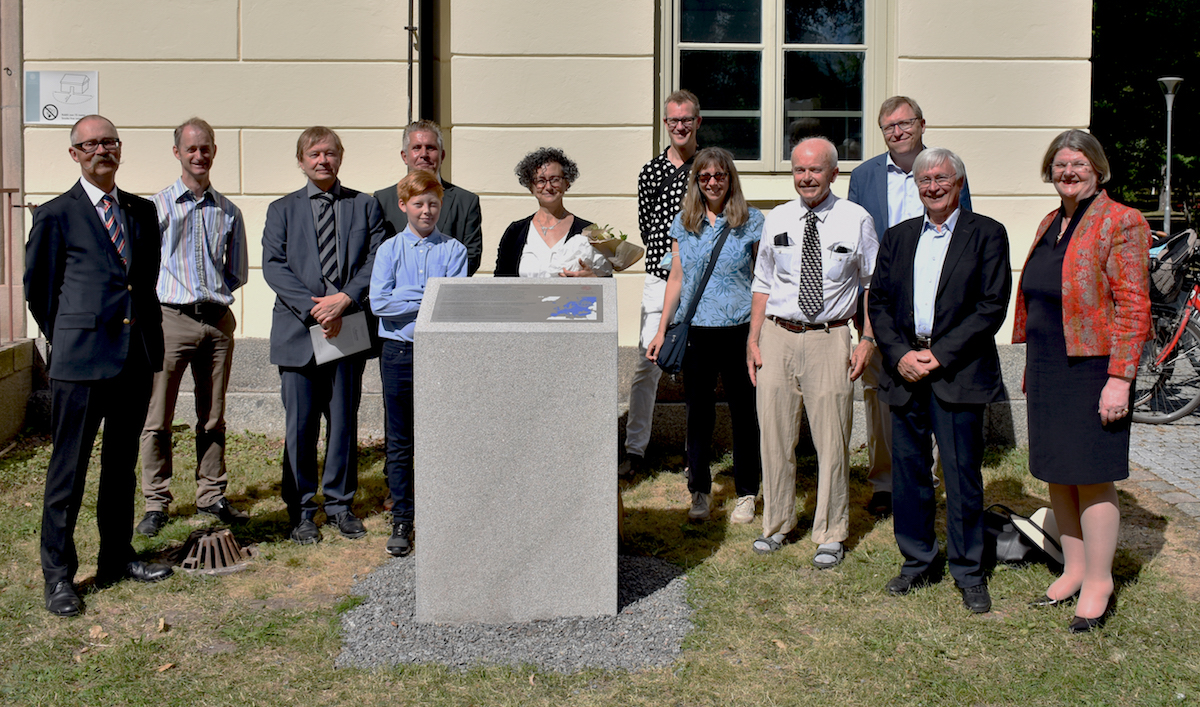
The plaque of the EPS Historic Site celebrating Anders Jonas Ångström was unveiled by the EPS Vice President Petra Rudolf (right end) - Image credit: Camilla Thulin
Tags:
Anders Jonas Ångström
Department of Physics
EPS Historic Site
EPS Historic Sites Selection Committee
Sweden
Uppsala
Permalink
|
|
|
|
 Print Page
 Blog Home
 All Blogs
 RSS
RSS