|
|
Posted By Administration,
Friday 17 January 2025
Updated: Friday 17 January 2025
|

The European Physical Society launched the Emmy Noether Distinction
to recognize noteworthy female physicists who have a strong connection to
Europe through their nationality or work.
Emmy Noether, with her
fundamental and revolutionary work in the abstract algebra and on
conservation laws in theoretical physics, is an exceptional historical
figure for all generations - past, present and future - of physicists.
The
laureates of the Emmy Noether Distinction are chosen for their capacity
to inspire the next generation of scientists, and especially encourage
women to pursue a career in physics. Attribution criteria therefore
focus on the candidate’s:
• research achievements
• endeavours to promote gender equality and the empowerment of women in physics
• coordination of projects and management activity
• service to the scientific community and research administration
Nominators are encouraged to address these four points in their proposal.
Commencing
2022, the EPS Emmy Noether Distinction for Women in Physics is to be
awarded once a year, to two distinguished women in physics. Namely,
the Emmy Noether Distinction will be awarded to an early- and mid–career
laureate, as well as to a more advanced candidate, as a Distinction for
her full career.
|
The selection committee, appointed by the EPS
Equal Opportunities Committee, will consider nominations of women
in physics working in Europe for the 2024 Edition of the Emmy Noether Distinction as of the nomination deadline of 31st March 2025.
|
To make a nomination, apply via this site or submit the following documents to the EPS Secretariat:
-
A cover letter, detailing (in no more than 3 paragraphs) the motivation for awarding the EPS Emmy Noether Distinction to the nominee and providing the proposed citation (for.... or in recognition of.... One sentence, <30 words);
-
The nominee’s name, institution and email
-
The nominee’s CV
-
The nominator’s name, institution, and email
-
Optional: No more than 3 support letters
 Download the distinction charter Download the distinction charter
Read more about the EPS Emmy Noether Distinction on the EPS website
Tags:
EPS Emmy Noether Distinction
EPS EOC
EPS Equal Opportunities Committee
gender equality
women in physics
Permalink
|
|
|
Posted By Gina Gunaratnam,
Tuesday 26 November 2024
|
Author: Pas García
The Women in Physics Group (GEMF) of the Royal Spanish Society of Physics organised a symposium earlier this year. It was held in the frame of the XXXIX Biennal of the society in Donostia, Spain in July 2024. It aims to discuss issues related to strategies to increase the presence of women in physics, to make their achievements visible and to defend the interests and equal rights and opportunities of women physicists.

Pas García (left), president of the GEMF, introduced Ursula Keller (right).
The talk was entitled ‘Dual-comb generation from a single laser cavity’ - image: GEMF
Ursula Keller proposal and plenary presentation
Proposal for the theme of Dialogue 2: ‘Women's leadership in physics’ moderated by Itziar Otegui, head of outreach at CIC nanoGUNE. In this dialogue between a more senior (Ursula Keller from ETH Zurich) and junior (Irene Abril,
member of our group and PhD student at the University of Cambridge,
THANK YOU, IRENE!), the central challenges to achieve equality in
science were addressed. They reviewed the data, analysed institutional
strategies and highlighted that the process is stagnating. We must try
to move towards a new model of inclusive leadership in which the
importance of male allies is fundamental.
Symposium ‘Women in Physics’
As
part of the Physics Biennial, the Women in Physics Symposium was held
with the participation of 8 oral presentations. The GEMF symposium aimed
to discuss issues related to strategies to increase the presence of
women in physics, to make their achievements visible and to defend the
interests and equal rights and opportunities of women physicists. The
Symposium included an invited talk by Lorena Fernández,
computer engineer, director of digital identity at the University of
Deusto and STEAM disseminator, as well as an expert on gender and
science, especially in the field of ICTs.
PART 1: Moderated by Màriam Tórtola, secretary-treasurer of the GEMF.
- Marta Seror, of the Institute of Physics of Cantabria. ‘Traces and Trails: Women Professors of Atomic, Molecular and Nuclear Physics in Spain’.
Marta
recalled that the percentage of female professors in physics is 15%,
and dedicated the presentation to the female professors of FAMN (Atomic,
Molecular and Nuclear Physics). In this study, she conducted a series
of interviews with active and retired female professors from Spanish
public universities, analysing the extent to which gender influences or
has influenced their scientific careers and academic trajectories. In
addition to the testimonies collected, another purpose of the study was
to locate and highlight female professors in this discipline. The
characteristics of this branch of knowledge make the physics of the very
small a field in which women have played and continue to play a
particularly relevant role.
- Míriam Comet-Donoso, Universitat de Barcelona, “No questions asked: gendered participation patterns in higher education in physics”
This
study was also carried out by M. Romagosa-Torrallardona UB, T.
Donoso-Vázquez,UB, A. T. Danielsson Stockholm University, P.
Folgueiras-Bertomeu UB and S. Estradé UB. The study addressed the
different dynamics in the participation of physics students in class
according to their gender. Women tend to ask fewer questions than men,
which reflects the social norms that prioritise obedience and
non-disruptive behaviour in women. In contrast, men tend to engage in
more explanatory discourse, in line with gender stereotypes that value
confidence and competitiveness. The study employed a mixed design
comprising quantitative observations (n=900) and, for the qualitative
part, a focus group discussion that corroborated these disparities in
classroom participation.
- Ana Xesús López Díaz, de la Universidad de A Coruña, “Gender
approach in university teaching: activities of the Grupo de Innovación
Docente Multidisciplinar para a Igualdade de Xénero (GIDMIX)”
This
work also carried out by A. Ramil (UdC), M. Carreiro (UdC), C. López
(UdC) and E. Aguayo (USC), highlighted the importance of teaching with a
gender perspective to improve the quality and social relevance of the
knowledge, technologies and innovations that are produced. It can also
stimulate critical thinking and develop competencies that enable
students to avoid gender blindness in their future professional
practice. However, diagnoses of the degree of integration in the
classroom reveal disparities between universities and, in general,
partial integration. Among the causes identified are the lack of teacher
training on gender issues and the lack of methodological guides on how
to introduce the gender dimension, as well as practical examples of how
to apply it in different subjects.
- Rocío Vilar Cortabitarte, of the Institute of Physics of Cantabria, ‘Strengthening equality and diversity at the Institute of Physics of Cantabria’.
S. Martinez, M. Ceballos, J. Piedra, J. Sáinz-Pardo, R. García, D. Herranz, L. Graafland, R. Domínguez,and K. Vaaiyapuri.
The talk presented the fantastic activities carried out by the Equality
and Diversity Commission of the IFCA (CSIC-UC), which earned them the
recognition of the second prize of the equality award granted by the
CSIC in 2018. The work of the commission was also awarded the VI
Equality Award of the University of Cantabria in 2022. The main
objective of this commission is to include the gender and diversity
perspective in the daily development of IFCA's scientific work.
PART 2: Moderated by Ana X. López, vice-president of the GEMF.
-
Núria Garro, of Faculty of Physics of the University of Valencia, “Tornem als instituts: activities to make women in Physics studies more visible’”
The work was also carried out by M. Delgado, P. García-Martínez, S. Planelles and M. Tórtola, from the UVEG.
In this communication, the activity ‘Tornem als instituts’ was
presented, carried out by students of the Faculty of Physics of the
University of Valencia in the 22/23 and 23/24 academic years and
supervised by the professors of the Comissió d'Igualtat. The activity
consists of holding informative talks in secondary schools, with the
speakers being students of the faculty and the educational centres
targeted being those in which they themselves studied. In figures,
‘Tornem als instituts’ has been very well received: in the first two
editions, a total of 45 students, 40 women and 5 men, signed up for the
activity, and informative talks have been given in 34 schools in the
three Valencian provinces. The estimated number of students receiving
these talks is around 3,500.
- Màriam Tórtola, of the Faculty of Physics of the University of Valencia, ‘Meitner Project - Remembering the pioneers of Nuclear and Particle Physics’.
With
the participation of C. Escobar, N. Falcó, I. Laderescu, O. Mena, A.
Molina, R. Molina, M. Moreno, D. Muñoz, S. Orrigo, J. Palacios, S.
Pastor, D. Rodríguez, S. Rubio, B. Rubio, J. L. Taín and M. Villaplana,
from the Institute of Corpuscular Physics (CSIC / University of
Valencia).
Proyecto Meitner is a scientific dissemination initiative
with the aim of recovering and highlighting the contribution of the
great pioneers of nuclear and particle physics through the figure of
Lise Meitner. This project, which combines science with artistic
disciplines, includes activities as diverse as a play, a conference on
science and gender, a teaching mentoring programme, a science and art
competition, videos on social networks and a lot of educational material
to give visibility to women in science, bringing scientists of the past
and present in Nuclear and Particle Physics to all audiences. Proyecto
Meitner has received grants from organisations such as FECYT, CSIC, the
University of Valencia and the Provincial Council of Valencia, and has
been awarded the second STEAM Alliance prize for female talent by the
Ministry of Education and Vocational Training in 2023.
- Matilde Ariza Montes, from the ‘Pedro Espinosa’ Secondary School, ‘Women scientists with the gait of giants’.
In
this magnificent and inspiring presentation, Mati Ariza told us about
the activities that she has been carrying out in her school for some
time with the aim of making female profiles in the scientific world
visible so that students can discover references in fields such as
physics, thus encouraging scientific vocations from an early age. In
this work, hundreds of women of national and international relevance
have been searched for their achievements in science and, secondly, they
have been selected for their actions, which have been worthy of the
prominence they enjoy in the field of science. The work has led to the
creation of a database for subsequent publication as a reference book.
Participation of the European Physical Society (EPS)
We
would like to thank Gina Gunaratnam, Communication Coordinator,
European Physical Society, that sent us the fantastic calendars of
“Inspiring Physicist 2024” that we offered to participants.

Tags:
gender equality
Royal Spanish Society of Physics
RSEF
symposium
women in science
Permalink
|
|
|
Posted By Administration,
Friday 22 November 2024
|
Author: Anna Lipniacka
NORNDIP, the Annual Conference of the Nordic Network for Diversity in
Physics, took place at the University of Bergen, Norway, in May 2024.
See: https://indico.cern.ch/event/1384666/overview
These
conferences typically have a balanced mixture of invited physics talks
and gender talks. Gender talks cover gender-balance reports from Nordic
Countries. Each conference has a special leading theme, in 2024 the
theme was "Microaggression", the leading theme of the 2025 conference
will be "Diverse trajectories - Challenging the norms in physics
research and culture”.
Below, a short report from the leading
themes of gender-talks. Adrienne Taxler reported on quantitative studies
of barriers to diversity in physics in academia, quoting sexual
harassment, hostile climate, microaggressions as often quoted problems.
Randi Gressgård reported on her studies of microaggressions in academic
institutions, noting that people of color and women are often subtly
marked as intruders even by persons with good intentions.
According
to studies, women and minority people are assumed to be inferior or
more junior in rank than they actually are, through little encounters
signalling lack of competence, skill or intelligence. Every female
professor I know was asked at least once "Are you a student here?"
during her professorship career, and not because of her young looks. It
is because only ‘When you look like what they expect a professor to be,
you are treated like a professor’. Siri Øyslebø Sørensen and Eva
Amundsdotter reported on the project GenderAct, an institutional project
running at the Faculty of Mathematics and Natural Sciences of the
University of Bergen, Norway.
The gender (in) balance at the
Faculty is stable for the last 20 years. The project had as a first part
a task to understand the complicated causes of gender imbalance in this
specific environment, then mobilize for change and transform patterns
as the last step. During this process it was learned that resistance
towards the topic of gender as such is common in academic institutions.
This resistance takes forms of gender hostility - discomfort associated
with becoming aware/ conscious and gender blindness - strong belief in
meritocracy as neutral. There is a resistance to change and transform
gendered patterns that takes forms of undermining, distracting
attention, pretending, sabotage, avoidance, disclaiming. The
practical forms of resistance observed for this particular project in
interaction with leaders of the departments were: no open reactions,
just ‘whispering in the hallways’, action plan is approved, but not
followed up on, open critique in plenary meeting.
The next phase
of the GenderAct project will study the resistance to change, and how to
deal with it. The most optimistic report was by Maria Saline, a
coordinator of Gender Initiative for Excellence, GENIE at Chalmers
University in Gothenburg, Sweden. The project seems to be on a good way
to reverse barriers to female faculty hiring and retention by investing
in excellent hires.
Tags:
conference
diversity
gender equality
GenderAct
Norway
women in physics
Permalink
|
|
|
Posted By Gina Gunaratnam,
Tuesday 22 October 2024
|

Author: Lorena Ballesteros Ferraz and Gina Gunaratnam
Lorena Ballesteros Ferraz is postdoctoral researcher
at the Laboratoire de Physique Théorique et Modélisation, CNRS Unité
8089, CY Cergy Paris Université in France. She participated in the writing of the editorial of the EPS calendar of inspiring physicists in 2024, together with Sébastien Mouchet and Riccardo Muolo. They are engaged in gender equality and inclusion in physics.
How did you get to know the European Physical Society?
As
a bachelor’s student at the Complutense University of Madrid, I was
fortunate to have several professors who were actively involved in the
management of the Spanish Physical Society. Through their connections, I
gained access to the society’s publications, sparking my interest in
the field. Later, when I pursued my PhD in Namur, Belgium, I was
introduced to Europhysics News through the Belgian Physical Society,
further broadening my engagement with the European physics community.
Could you describe your current field of research in a few words?
I
am currently focused on various aspects of measurements in quantum
physics, where, unlike in most everyday situations, measuring
fundamentally disturbs the system's state. For instance, when we measure
the temperature of an oven, the measurement does not alter the
temperature. However, in quantum physics, measuring the state of an atom
changes that state. My research explores different techniques for
extracting information from quantum states, ranging from weak, where the
disturbance is minimal, to ideal strong measurements. Additionally, I
am interested in understanding the energetic balance involved in these
measurement processes.
What are the challenges of your field?
Quantum
physics is a fascinating and deeply intriguing field. Despite its
status as one of the most reliable theories in science, it remains
highly counterintuitive, leading to rich and ongoing debates about its
interpretation and real-world implications. Among the most surprising
aspects of quantum physics is the role of measurement, which continues
to be a subject of intense discussion and diverging interpretations. On
the technological front, the challenge lies in refining measurement
protocols to achieve greater precision and energy efficiency. These
advancements hold significant potential for future applications,
including the development of more sensitive sensors and the advancement
of quantum computing.
How would you encourage students to work in this field?
I
find quantum physics, particularly the study of quantum measurements,
to be an incredibly exciting and intriguing field. I encourage students
who enjoy thinking outside the box and grappling with counterintuitive
phenomena to join and contribute to the evolution of this discipline.
Quantum physics also has a bright future, with numerous advanced
applications on the horizon. Therefore, I also suggest students
interested in driving technological innovation to explore this field and
be part of its development.
Why is it important for you to encourage girls to study physics?
Early
in my education, even during the final years of secondary school, I
noticed that I was one of the few women pursuing a path in science and
technology. This trend continued as I began my degree in Physics. I
believe this imbalance exists because women are not sufficiently
encouraged to pursue these fields. However, research shows that
diversity is crucial for advancing scientific innovation. The
involvement of women in our field is not only essential for the progress
of science, but also for empowering young girls to pursue their dreams
without being constrained by traditional gender roles.
More info
Tags:
diversity
EPS Emmy Noether Distinction
gender equality
inclusion
outreach
young physicists
Permalink
|
|
|
Posted By Administration,
Monday 21 October 2024
|

Authors: Riccardo Muolo & Gina Gunaratnam
In 2024, the EPS released a calendar of "Inspiring Physicists". Read
the interview of Riccardo Muolo, postdoctoral researcher at the Tokyo Institute of Technology in Japan. He wrote the editorial of the calendar, together with Lorena
Ballesteros Ferraz and Sébastien Mouchet. They also published an opinion letter about the Matilda Effect in the Society's magazine EPN.
How did you get to know the European Physical Society?
Some
colleagues in Namur, Belgium, told me about the society and its monthly
magazine, so I checked it out and I was impressed by all the
initiatives regarding outreach and education.
Could you describe your current field of research in a few words?
My
field is complex systems, at the edge between physics and applied
mathematics. More specifically, I study the emergence of collective
behaviors, such as synchronization, in an ensemble of elementary units.
They way in which such units interact with each other shapes the
collective dynamics, which is way richer than the individual ones. The
whole is much more than the sum of its parts.
What are the challenges of your field?
Until
now, we have developed solid theoretical tools, but what is missing is a
bridge towards observations and experiments. There are some models with
many variables claiming that they explain certain phenomena, but to me
they don’t make much sense because they work only for a specific
phenomenon with variables and parameters chosen ad hoc. I think
the main challenge now is to build models closer to reality that are
still meaningful and can help us not only explain, but also understand,
what we observe.
How would you encourage students to work in this field?
Be
curious. The field of complex systems is intrinsically
interdisciplinary and gives the chance to work with researchers from
many different fields. Besides the technical skills that are required to
carry out any research in physics and mathematics, in complex systems
the key is to be curious and open minded: one has to be able to
communicate with scientists from sociology to biology, meaning that we
need to understand different approaches and ways to treat problems. It
can be hard at first, but in the end it is so rewarding.
Interdisciplinary research is very exciting!
Why is it important for you to encourage girls to study physics?
I
think that we need science to reflect the composition of society. So
this is related to have more girls in physics, but in general to have a
more diverse and heterogeneous environment. This mainly for two reasons.
First, because only a truly diverse environment can foster new ideas
and tackle the many challenges ahead of us. If we put in a room only
people with the same mentality and background, we are missing a whole
lot of perspective. Second, because, whether we like it or not, science,
and physics in particular, is a tool of power. Our research shapes the
future in good and in bad, and our discoveries have a tremendous impact
on society. Given its importance, we need everybody at the table and we
must keep it democratic and transparent as much as possible.
Short Bio
I
studied physics (Bachelor) and applied mathematics (Master) in
Florence, Italy. For a year, I was PhD student of biology at the VU
Amsterdam, The Netherlands, but then moved back to mathematics starting a
PhD in Namur, Belgium. After my graduation, I moved to Tokyo for a
postdoc, position that I currently hold.
Besides my academic
activity, I’m involved in an outreach project in Italy called “Penne Amiche della Scienza” (the Italian version of the US Letters to a Pre-scientist) in which we connect a scientist with a primary or middle
school class and have them write letters to each other.
Tags:
diversity
EPS Emmy Noether Distinction
gender equality
inclusion
outreach
young physicists
Permalink
|
|
|
Posted By Administration,
Monday 21 October 2024
|

FLTR: Elisabetta Paladino, Anna Di Ciaccio, Petra Rudolf, Pas Garcia Martinez and Sara Pirrone - image credit: S. Pirrone
Author: Sara Pirrone on behalf of the SIF-CPO
The
2024 edition of the National Congress of the Italian Physics Society
(SIF), which brings together around 800 Italian physicists for a whole
week, was held in Bologna from 9 to 13 September. The Congress, composed
of plenary plus 7 parallel sessions dedicated to different fields of
physics, represents the meeting point of the scientific community, where
Italian researchers, teachers and students find their common
background. During the Congress, Round Tables are also organized on
specific topics, and particularly this year the SIF Equal Opportunities
Committee (CPO) has planned the Round Table entitled: Actions towards Equal Opportunities in European Physical Societies, moderated by Anna Di Ciaccio, member of the SIF CPO.
The invited participants were Pas García Martínez, Chair of the "Women in Physics" group of the Royal Spanish Physical Society, Elisabetta Paladino, invited as representative of "Women for Quantum", Sara Pirrone, Chair of the CPO of the Italian Physical Society and Petra Rudolf, Chair of the Equal Opportunities Committee (EOC) of the European Physical Society (EPS).
Pas Garcia Martinez
presented the activities of the Specialised Group “Women in Physics”,
created in 2002 according to the guidelines of IUPAP (International
Union of Pure and Applied Physics). She presented statistics and figures
on the presence of women and men in physics in Spanish universities, as
well as projects and initiatives to improve the balance. Among them:
the organization of biennial conferences "Women in Physics", where only
women can be speakers; the organization of webinars on different related
topics; a calendar dedicated to women scientists; the application of
the "Women in Physics" program, and of the Equity Plan actions against
sexism and violence.
Elisabetta Paladino,
presented the "Manifesto of Values" written and supported by the
international group W4Q (Women for Quantum), composed of more than 200
women senior professors in the broad field of quantum physics. The W4Q
Manifesto of Values aims to make the quantum scientific community aware
that despite "social policies" (i.e. regional, national, and EU
initiatives) in the field of gender equality, in many cases the change
is only symbolic. The aim is to achieve real change, to question the way
research (quantum) is currently conducted, and to open a dialogue for
change.
Sara Pirrone presented figures and
statistics on the gender balance in academia and research organizations
in Italy and summarised the main actions carried out by the CPO-SIF from
2017 to date, dedicated to concrete support for gender equality. Among
them: the organization of dedicated facilities for childcare offered
during the Annual National Congress; the creation, since 2020, of the
annual "Laura Bassi" award to promote the talent of women in physics;
the realization of the SIF Gender Budget report, analysing data from the
Annual Congress since 2010, showing the presence of women in different
roles (chair, invited speaker, section president).
Petra Rudolf
illustrated the actions of the EOC of EPS, as The Emmy Noether
Distinction for Women in Physics; The Code of Conduct for EPS
conferences; Round tables, seminars, and workshops on career
and gender issues and how to face harassment. She presented also many
ongoing actions, as well as: Cooperation with EPS Divisions &
Groups, monitoring projects for Gender Fairness in Physics, increasing
participation of women in committees, addressing the number of women
nominations for EPS Prizes/Awards, and promoting young women and
minorities. Besides, the Train-the-trainers workshop is in preparation for 2025.
After
the talks, a debate was opened, and many interesting questions and
comments came from the audience on different subjects. From the
discussions, some points were highlighted, among these, for example, the
need to continue to realize activities not only in the field of Equal
Opportunity, but also to extend actions related to the inclusion of
diversity, ethnicity, and, last but not least, the serious matter of
harassment. Besides, the relevance of collaboration among different
organizations was highlighted.
Tags:
congress
EPS EOC
EPS Equal Opportunities Committee
gender equality
SIF
young physicists
Permalink
|
|
|
Posted By Administration,
Monday 21 October 2024
|

Sébastien Mouchet - image credit: S. Mouchet
Authors: Sébastien Mouchet & Gina Gunaratnam
In 2024, the EPS released a calendar of "Inspiring Physicists". Read
the interview of Sébastien Mouchet, researcher & honorary senior
lecturer at the University of Mons, Belgium and the University of
Exeter, UK. He wrote the editorial of the calendar, together with Lorena
Ballesteros Ferraz and Riccardo Muolo.
How did you get to know the European Physical Society?
As
a master’s student at the University of Namur, Belgium, I attended the
annual meeting of the Belgian Physical Society (BPS) organised in Namur
in May 2011. BPS is a member society of the European Physical Society. I
became a member of the BPS and started receiving the Europhysics News. I
remember that the issue that I got at that conference featured an
introduction to natural and bioinspired photonics co-authored by Pete
Vukusic (https://www.europhysicsnews.org/articles/epn/abs/2011/03/epn2011423p20/epn2011423p20.html)
whose group hosted me for about 4-5 years as a postdoctoral researcher
later on in my career. It was a surprising coincidence as I was at the
time carrying out my master’s thesis in this field.
Could you describe your current field of research in a few words?
The
field of natural and bioinspired photonics investigates optical effects
in natural organisms, typically phenomena arising from photonic
structures, and takes inspiration from these effects and the related
optical structures to develop novel technological applications.
What are the challenges of your field?
One
of the main challenges in natural photonics is to understand how nature
produces photonic structures, often very regular structures at the
100-nm scale that compete in terms of performances with structures
fabricated by nanotechnology. Unveiling the exact developmental stages
of these structures would be a big step forward.
How would you encourage students to work in this field?
This
field of research is very multidisciplinary. It involves some aspects
of physics and photonics, of materials science as well as of biology. It
also relies on both experimental and numerical approaches. I often try
to adapt the project of eager students to what they want and what
motivates them: more simulations, only simulations, more experiments or
only experiments; more physics, more materials science, or more biology
depending on what they are interested in.
Why is it important for you to encourage girls to study physics?
Since
the second year of my bachelor’s degree to the end of my master’s
degree in physics, my cohort was exclusively composed of men. I had a
great time but one must admit that it was a bit peculiar. I could not
imagine that girls and women are less good at or less interested in
physics. I think that science and research have much to gain from being
more inclusive and diverse.
More info
Tags:
diversity
EPS Emmy Noether Distinction
gender equality
inclusion
outreach
young physicists
Permalink
|
|
|
Posted By Administration,
Monday 15 February 2021
Updated: Monday 22 February 2021
|
The Winter 2020 EPS Emmy Noether Distinction is awarded to:
ICREA Research Professor and researcher at the Institut de Ciències Fotòniques (ICFO) in Castelldefels near Barcelona in Spain « for her outstanding contributions to nano-biophysics and to numerous programs to support women in physics ».
At
ICFO, María García Parajo is the leader of the Single Molecule
Biophotonics group of IBEC-Institut de Bioenginyeria de Catalunya. She
received her Ph.D from Imperial College, University of London, UK, in
1993, from where she proceeded to take an Assistant professorship at the
University of Twente, the Netherlands, where she worked for four years
in the Applied Optics Group at MESA+ / Institute for Nanotechnology. She
moved to Barcelona in 2005 and has worked there ever since.
María
García Parajo has contributed decisively to several technical
developments that allow the mapping and the direct visualisation of
biomolecular interactions regulating life´s essential processes. The
methods she has pioneered and used have provided profound insights on
the spatiotemporal organisation of the plasma membrane of cells, which
influence diverse processes in the immune system such as pathogenic
infections (including HIV pathogenesis), autoimmunity and immune cell
migration (with direct implications in proper immune regulation and
cancer). One of her salient results (published in Cell in 2015) has led
to the direct visualisation of chromatin inside intact cells, which
allowed for the first time ever to correlate chromatin compaction to
cell differentiation.
María García Parajo has contributed
tirelessly to physics education via summer schools and training
programmes as well as by the furthering of equal opportunities and
gender equality in physics. María has contributed to and participated in
a great many activities, committees, talks, seminars, round-tables
panels, etc., oriented at creating opportunities for women scientists.
Since September 2017, María García Parajo is part of the Gender
committee at ICFO, where she has initiated a large number of actions to
increase the visibility, awareness & empowerment of young talented
female researchers promoting the successful construction of their
academic career.

Prof. María García Parajo - image credit: ICFO
Tags:
EPS Emmy Noether Distinction
EPS EOC
EPS Equal Opportunities Committee
gender equality
ICFO
nano-biophysics
nanotechnology
women in science
Permalink
|
|
|
Posted By Administration,
Monday 7 December 2020
|
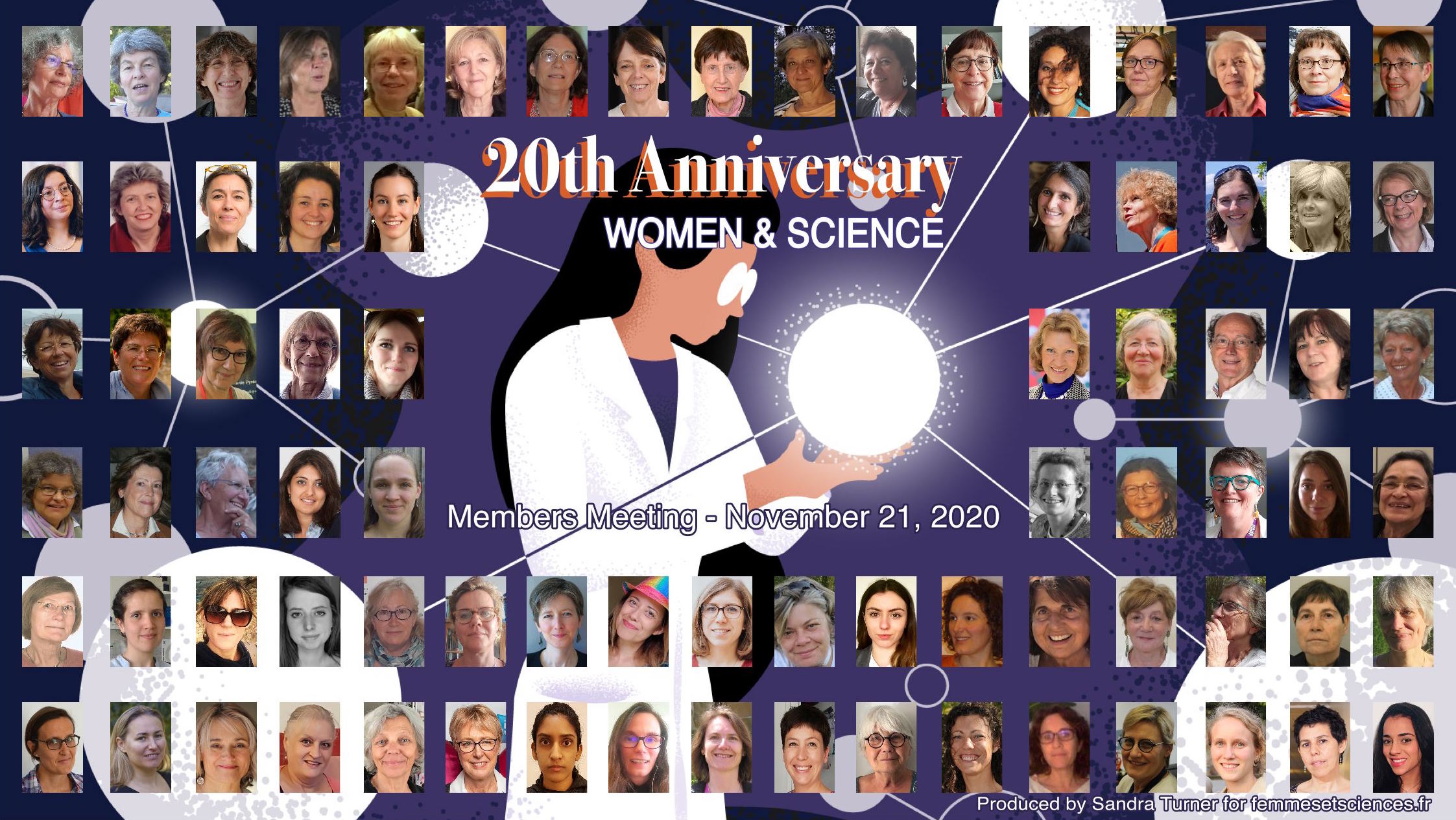
Author: Claudine Hermann, EPWS President, Femmes & Sciences Vice-President
The 20th anniversary of the French association of Women in Science took place on 20-21 November 2020
A
team of highly motivated members began to prepare this anniversary one
year ago. The programme was very ambitious: two sessions related to
enterprises and schooling over a day plus a full day session for the
members, an exhibition of art photos of women scientists on the railings
of Paris Town Hall. But then a first 2020 COVID-19 lockdown occurred in
spring, then a second one this autumn… Multiple readjustments were
necessary, following the new pandemic rules. Finally one session and the
exhibition have been postponed to 2021, and two sessions were adapted
to videoconferencing (by very expert volunteer members!).
On the afternoon of November 20th
the session “Girls Studies Orientation towards Science – Status Quo and
Leverages” primarily targeted teachers (and was an official training
for over 100 of them) and the general public. There were 351 attendees,
from the different regions of France and also from Ivory Coast,
Madagascar, West Indies, Hong Kong, Singapore… After a talk by an
Education scientist on studies and survey results about the choice of
science by girls, the next speaker trained the teachers on “Fighting,
Identifying and De-Crystallising Stereotypes”. Then the different tools
for teenagers and educators on science orientation for young people,
realised by the association Femmes & Sciences (F&S), were
described. Finally a “speed-meeting” allowed five women scientists of
various ages and disciplines to introduce their career path and their
scientific activity. The audience appreciated very much that afternoon
and in particular the testimonies: even if F&S members are visiting
many classes in various parts of France, unfortunately they cannot go
everywhere!
The last session on November 21th during Saturday
morning, “We, the F&S members”, was for members only; 86 of them
were connected out of 350. After an introduction by Nadine Halberstadt,
F&S President, who pointed that it was the first time that the
association was organising such a session for members only, the
attendance was split into groups of 10 persons in “ice-breaking”
parallel sessions. Then each French regional group presented their
activities (tools for teenagers, exhibitions, career descriptions for
teenagers or teenager girls, mentoring of PhD female students, documents
for teachers against stereotypes or presenting portraits of women
scientists of the past and of nowadays…). Next came the analysis of the
results of a survey launched by F&S, and having received almost
3.000 answers, on the way women and men scientists experienced the
COVID-19 period. In the final discussion the participants expressed
their interest in renewing such a session, which allows members to know
better each other and regional groups to take advantage of the other
groups’ experience.
Tags:
EPS EOC
Femmes&Sciences
gender equality
outreach
Permalink
|
|
|
Posted By Administration,
Monday 14 September 2020
Updated: Monday 14 September 2020
|
Author: Luc Bergé
Maria Viñas’s research focuses on the physics of vision and vision
psychophysics, with Adaptive Optics based visual technologies to image
the eye, and study visual function and neural adaptation in
polychromatic conditions under a very wide range of
artificially-simulated-conditions. Her work on Adaptive Optics visual
simulation in polychromatic conditions has contributed to different
areas of research in Visual Optics and Biophotonics, like the study of
chromatic aberrations in phakic and pseudophakic eyes and their impact
on vision, the optical, visual and neural effects of astigmatism, the
experimental simulation of complex multifocal solutions for Presbyopia,
and the pre-operative simulation of post-operative multifocal vision
with those corrections. Maria Viñas completed undergraduate studies in
Optics and Optical Engineering in the Complutense University of Madrid
(UCM), followed by a predoctoral work at the Visual Optics &
Biophotonics Lab, where she obtained her PhD in Physics in 2015. She is
currently an IF-MSCA fellow with a joint position at the Wellman Center
for Photomedicine, Massachusetts General Hospital and Harvard Medical
School (USA) and the Institute of Optics of the Spanish National
Research Council (Spain). She is also founding member of the spin-off
company, 2EyesVision, which develops clinical visual simulators.
Maria
Viñas received several recognitions from scientific societies (OSA,
ARVO). In particular, she was elected OSA Ambassador of The Optical
Society (OSA) in 2019. She is past president of IOSA - Institute of
Optics OSA Student Chapter - where among a wide range of activities she
has authored a very successful book of optical experiments. She is
currently the vice-chair of the Visual Sciences Committee of the Spanish
Optical Society, and chair of the Women in Optics and Photonics
committee of the Spanish Optical Society, where she fights gender
stereotypes in science, technology, engineering, and mathematics (STEM).
Luc Bergé, President-Elect of the EPS and chair of the EPS Equal Opportunity Committee (LB), interviewed Maria Viñas (MV).
LB: Why did you choose to study physics?
MV:
I actually studied Optics and Optical engineering at the University
Complutense of Madrid. However, I became more and more interested in the
Optics/Physics behind the visual process and related technologies. That
is why, when I finished my Master’s degree, I joined the Visual Optics
and Biophotonics Lab of the Institute of Optics of the Spanish National
Research Council (CSIC). The group, led by Prof. Susana Marcos, had a
research line focused on the use of Adaptive Optics technologies,
inherited from astronomy and only very recently focused on visual
Optics, in order to study the optics of the eye and how the brain sees
the world through it. I was fascinated by that topic. The same
technology used to image the stars could be used to image the eye! Also,
I did my PhD there, developing novel Adaptive Optics systems to study
visual function and to improve optical corrections for visual problems,
like Myopia or Presbyopia. And I am really happy to see that some of
those technologies have jumped from the lab to the clinic, via a
spin-off company, 2EyesVision, which I co-founded. Now, I am really
excited to keep pursuing novel breakthroughs in the new phase of my
career, starting now as an IF-MSCA fellow with a joint position at the
Wellman Center for Photomedicine, Massachusetts General Hospital and
Harvard Medical School (USA) and the Institute of Optics of the Spanish
National Research Council (Spain).
LB: Any worry to match your family life and a career in physics?
MV:
Funny timing for that question, since I am now a postdoctoral
researcher with a 5 months old baby, and that fact has a real impact on
my work/life balance. I was not worried about this before; I did not
even think much about it. I could see my female colleagues struggle, but
I did not relate much. Now I am facing the real truth, I can say that
this situation is hard, but doable.
We all know that research
provides a very competitive environment, which requires carrying a high
workload and a lot of travelling, among other things. Numbers of female
scientists in STEM tell us that the struggle is higher for women. This
happens even before we consider having a family; it is deeply related to
gender stereotypes that affect us all. Also, the number of female
scientists in STEM areas is lower, because of the work/life balance,
which is typically harder to maintain for women. However, I am
optimistic about the future. Things are changing. Research/Academic
institutions are making an effort to attract female talents to STEM and
to maintain it by offering more flexibility, looking for strategies that
enable more diverse research teams or fighting stereotypes. There is
still much to be done, but I really think if you want to pursue a career
in STEM, this issue must not discourage you. It is so much fun to work
in the lab (as Prof. Donna Strickland said in her Nobel Prize
presentation) than the rest can be overcome.
LB: Are you worried about finding a job in physics?
MV:
I think when you are at a postdoctoral stage you certainly worry about
this. There are many options to explore, and you can join truly amazing
groups and develop very interesting projects. However, getting a
permanent position, in such a way that you can develop your own
independent projects and lead your research group is not so easy. I
think this is a common worry for many researches at this time: you love
your work, which is quite exciting, but your career is not as stable as
you’d like. In my case I have been very lucky so far, I cannot complain.
LB: What has been the personally most rewarding experience and also the biggest difficulty encountered so far in your career?
MV:
For me the biggest difficulty was the beginning. After graduating, I
started working in Industry, nothing related to research. However, I
desired something else. I knew I had found my path when I started my
PhD. I really like what I do. My most rewarding experiences have to do
with teaching, not only my students in the lab, but also students in the
University or children in outreach activities. How their curiosity
awakes, how they grow scientifically, is very rewarding.
LB:
Did you encounter any difficulty in finding funding for PhD or a
post-doc position related to the fact that you are a woman?
MV:
I was unaware of gender bias during my pre-doctoral years; I was happy
because I could focus on Science, only lab stuff mattered. However,
becoming a postdoctoral researcher changed my perception of things.
Scientific structures are more willing to incorporate male scientists
than female ones. Scientific networking is male dominated, how positions
are achieved, how connections are made…When you are the female
scientist in the room is always more difficult to make your voice heard,
no matter your experience, no matter your seniority, this can undermine
your confidence as a scientist. But I think that things are changing;
research groups are more and more diverse, which helps fighting gender
discrimination.
LB: Any suggestion to guarantee a balanced gender representation in physics?
MV:
For me the important thing here is to fight against gender stereotypes,
which are at the very centre of the problem. This is not only a
question of getting a balanced gender representation in physics, it is
also a problem that affects society as a whole, and which we should be
fighting together. Reducing unconscious bias is the real deal.
LB: Any particular advice for a young aspiring researcher?
MV: Enjoy what you do. A research career is tough, but it is also worthwhile.
LB: Do you have any female ‘physicist cult figure’ or ‘role model’?
MV:
Yes, I have been very lucky in that regard. I had a great professor
during my Master, Prof. Maria Luisa Calvo from the School of Physics of
the Complutense University of Madrid, who was truly inspiring. She went
on being a great mentor along the years. Of course, my PhD supervisor,
Prof. Susana Marcos from the Institute of Optics of the Spanish National
Research Council (CSIC), who taught me almost everything I know on
visual optics and about being a scientist, always supported me to
develop novel breakthrough projects.
Tags:
EPS EOC
EPS Equal Opportunities Committee
gender equality
OSA
RSPS
Visual Optics and Biophotonics
Permalink
|
|
|
|
 Print Page
 Blog Home
 All Blogs
 RSS
RSS